
Perfume Concentration Guide: How to Choose Between Parfum, EDP, and EDT
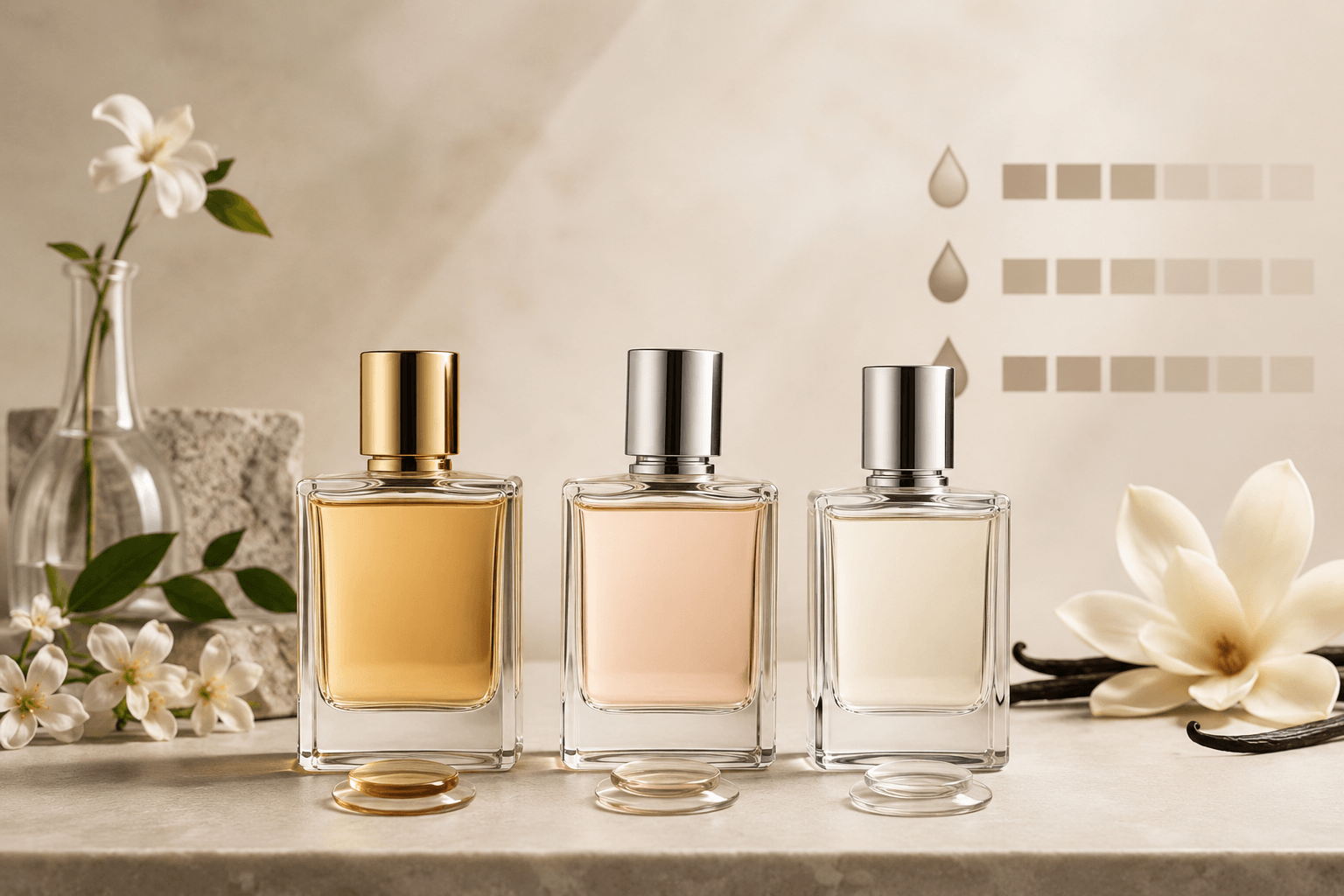
Perfume Concentration Explained: Parfum vs. Eau de parfum (EDP) vs. Eau de toilette (EDT)
Not all perfumes are created equal — even when they share the exact same scent. The difference between a fragrance that lasts two hours and one that lasts twelve often comes down to a single factor: concentration.
Whether you’re a consumer choosing your next bottle or a brand owner working with a perfume manufacturer Malaysia partner like Everfresh Premium, to develop a product line, understanding the difference between parfum, eau de parfum, and eau de toilette is essential to getting the right performance, cost, and positioning.
Key Takeaways
- Perfume concentration refers to the percentage of fragrance oil in the final formulation — it’s the single biggest factor determining intensity and longevity.
- Eau de parfum (EDP) typically contains 15–20% fragrance oil and lasts 6–8 hours; eau de toilette (EDT) contains 5–15% and lasts 3–5 hours.
- Parfum (extrait de parfum) sits at the top with 20–30% concentration and the longest wear time, often 8–12 hours.
- Malaysia’s tropical humidity and heat accelerate evaporation, which affects how each concentration performs on skin compared to temperate climates.
- For brand owners, concentration isn’t purely a marketing decision — it affects cost, IFRA compliance, and whether an alcohol-free (Halal-friendly) format is achievable.
- Higher concentration doesn’t automatically mean better quality; scent structure and formulation balance matter as much as the percentage itself.
What Determines Perfume Concentration?
Fragrance concentration refers to the percentage of pure fragrance (perfume) oil dissolved in a base of alcohol (and sometimes water). This single variable affects three things: how intense the scent is on application, how the fragrance evolves over time, and how long it lasts on skin.
It’s the reason the exact same fragrance composition can be sold as an EDT, an EDP, or a parfum — the scent story is identical, but the concentration changes the experience.
Perfume Concentration Types at a Glance
Type | Fragrance Oil Concentration | Typical Longevity | Best Suited For |
Parfum (Extrait de Parfum) | 20–30% | 8–12 hours | Evening events, formal occasions, cooler climates or air-conditioned settings |
Eau de Parfum (EDP) | 15–20% | 6–8 hours | Everyday wear and special occasions; the most versatile format |
Eau de Toilette (EDT) | 5–15% | 3–5 hours | Daytime wear, warm climates, reapplication throughout the day |
Eau de Cologne (EDC) | 2–5% | 1–2 hours | Very light refresh, often used post-shower or for quick reapplication |
Parfum (Extrait de Parfum): The Most Concentrated Format
Parfum, also called extrait de parfum, is the most concentrated fragrance type available, typically containing 20–30% fragrance oil. This high concentration produces a richer, more complex scent profile and the longest wear time of any format — often 8 to 12 hours. Because of its intensity, parfum is generally best suited to formal occasions or cooler, air-conditioned environments, where a bold, long-lasting scent won’t feel overwhelming.
Eau de Parfum (EDP): The Versatile Middle Ground
Eau de parfum sits between parfum and eau de toilette, typically containing 15–20% fragrance oil. This concentration offers a strong balance of intensity and longevity — usually 6 to 8 hours of wear — making it suitable for both everyday use and special occasions. For many brands, EDP is the sweet spot: strong enough to make an impression, without the cost and intensity of a full parfum concentration.
Eau de Toilette (EDT): Light and Everyday-Friendly
Eau de toilette contains a lower concentration of fragrance oil — generally 5–15% — with a higher proportion of alcohol. This makes it lighter, fresher, and faster to evaporate, which is precisely why it works so well for daytime wear or in warm, humid climates. EDT is often the preferred format for citrus, aquatic, or fresh fragrance profiles, where a heavier concentration would feel out of place.
The Malaysia Climate Factor
Concentration doesn’t perform identically everywhere. In Malaysia’s tropical humidity and heat, higher temperatures and moisture accelerate fragrance evaporation, which shortens how long any given concentration actually lasts on skin compared to cooler, drier climates.
Brighter top notes — citrus, aromatic herbs, light fruits — tend to project more strongly in humid heat, while rich base notes like sandalwood or amber cling to skin for a shorter effective window than they would in a temperate climate.
This matters directly for brand positioning: a fragrance formulated and tested for the European or Middle Eastern market may not perform the same way once it reaches Malaysian consumers.
Brands developing a signature scent for the local market should factor climate into both the concentration chosen and the specific note structure, not just copy a Western benchmark formula wholesale.
How Concentration Affects OEM Manufacturing Decisions
For brand owners working with a perfume manufacturer Malaysia partner, concentration is not simply a marketing label — it’s a formulation decision with real technical and commercial consequences.
Cost.
Fragrance oil is typically the most expensive raw material in a perfume formulation. Moving from a 10% EDT to a 20% EDP concentration meaningfully increases the cost per unit, which needs to be reflected in retail pricing and margin planning from the outset.
Regulatory compliance.
All fragrance concentrations must stay within limits set by the International Fragrance Association (IFRA), which govern maximum usage levels for specific ingredients by product category. Increasing concentration to boost longevity isn’t a simple dial — it has to be checked against IFRA dosage limits for the specific aroma chemicals used in the formula.
Alcohol vs. alcohol-free formats.
Given Malaysia’s Muslim-majority consumer base, many brands specifically want an alcohol-free or oil-based (attar-style) format rather than the traditional ethanol-based EDT/EDP/parfum structure.
This is a structural formulation choice, not just a labelling one — an experienced OEM manufacturer should be able to advise on how to achieve comparable projection and longevity in an alcohol-free base, which behaves differently to a traditional alcohol-based perfume.
Stability.
Higher concentration doesn’t automatically mean a better-performing fragrance. Overloading a formula with fragrance oil in an attempt to boost longevity can actually destabilise the scent structure — compressing the top notes and unbalancing the composition.
Getting the olfactive pyramid (top, middle, base notes) right matters as much as the raw percentage.
How to Choose the Right Concentration for Your Brand
When developing a fragrance line with an OEM partner, a few practical questions help guide the concentration decision:
- What’s the price point and positioning? Mass-market and gifting-oriented products often use EDT concentrations to manage cost; premium and niche positioning typically justifies EDP or parfum-level investment.
- What’s the primary use occasion? Daily wear products for Malaysia’s climate generally perform better as EDT; evening or special-occasion products can support the richer, longer-lasting EDP or parfum format.
- Does the brand need a Halal-certified, alcohol-free format? This should be decided early, since it shapes the entire formulation approach rather than being a late-stage adjustment.
- What’s the target retail channel? Products sold through retail or gifting channels where trial (spraying/testing) is limited may benefit from a stronger, more immediately recognisable EDP-level concentration.
Common Mistakes to Avoid
A common misstep is assuming higher concentration is always better — brands sometimes push toward parfum-level formulas assuming it signals more “premium,” without considering whether that concentration and price point actually fits their target customer or use case.
Another frequent issue is copying a competitor’s concentration percentage without accounting for differences in the underlying formula, since the same percentage can behave very differently depending on which aroma chemicals and fixatives are used.
Finally, brands sometimes decide on alcohol-free or Halal-certified positioning only after initial formulation work has begun, which can mean reworking the fragrance structure rather than building it in from the start.
Choosing the Right Format for Your Fragrance Line
There’s no universally “correct” concentration — the right choice depends on your brand’s positioning, price point, target climate, and whether an alcohol-free format is a requirement. EDT suits everyday, climate-friendly wear; EDP offers a versatile middle ground; parfum delivers maximum intensity and longevity for premium positioning.
If you’re weighing concentration alongside broader decisions like whether to launch with a ready-made scent or invest in a fully custom formula, our comparison of private label versus custom formulation walks through that decision framework in more detail.
Ready to Develop Your Fragrance Line?
Whether you’re choosing between EDT, EDP, or parfum concentrations, or need guidance on Halal-certified, alcohol-free formulations for the Malaysian market, working with an experienced OEM partner ensures your fragrance performs as intended — from formulation through to regulatory compliance.
Browse our fragrance perfume products, or explore our OEM and private label services to see how we can support your brand.


