
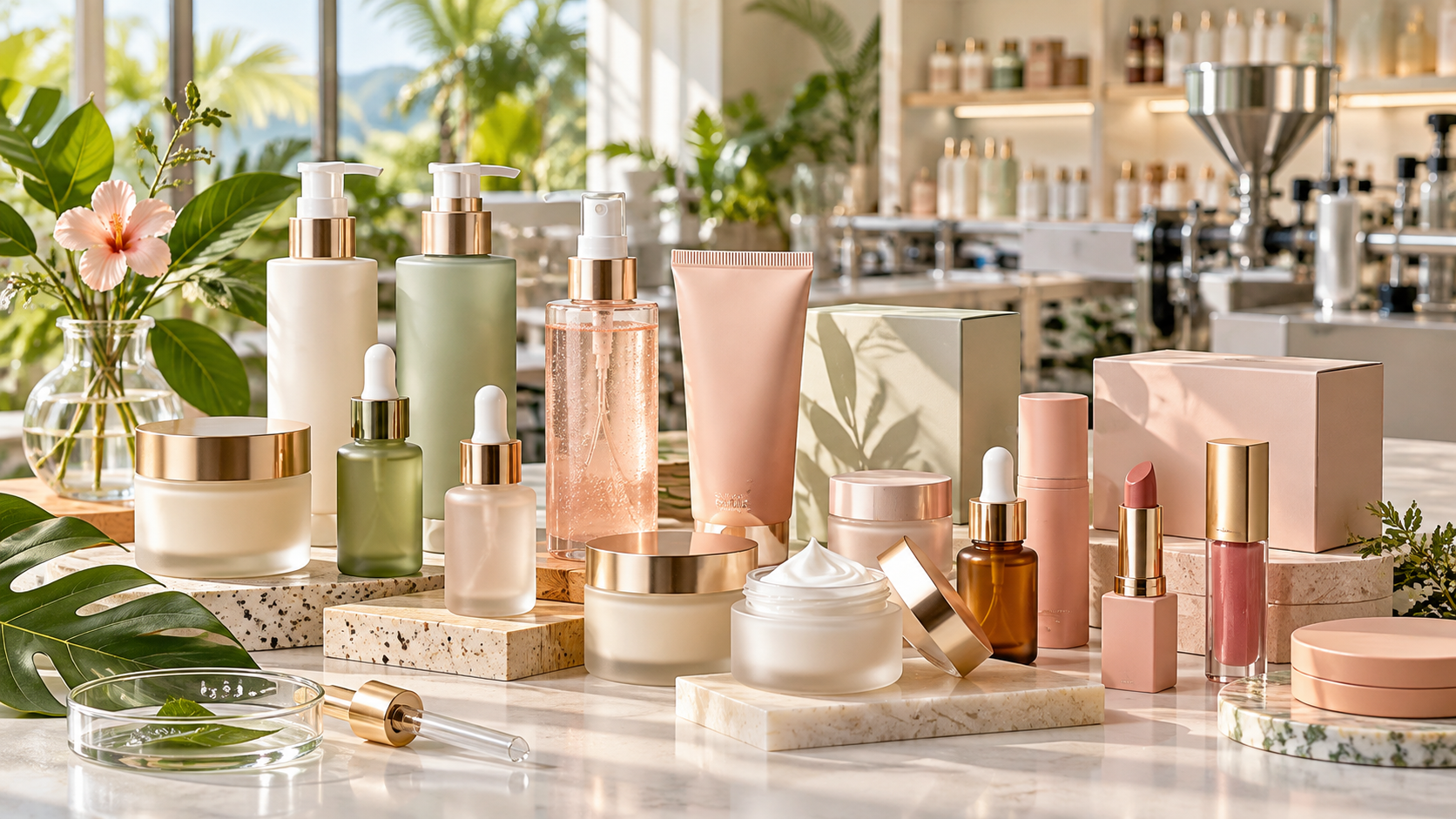
Trending Private Label Beauty Products in Malaysia: What’s Set to Go Viral in 2027
Private Label Beauty Products in Malaysia: 2027 Trends to Watch
Beauty trends move fast, and the brands that move with them tend to be the ones already working with a manufacturer who can turn a concept into shelf ready product in weeks, not months. A handful of product categories are being flagged by industry forecasters as likely to gain real traction heading into 2027.
Here’s what’s being watched, and how a private label beauty brand in Malaysia can actually act on it.
Key Takeaways
- Industry forecasts point to bakuchiol, fragrance dupes, hair perfume, men’s skincare, tone-up creams, skinimalism makeup, climate-adaptive haircare, and halal-luxury botanicals as categories gaining momentum heading into 2027.
- These are vendor and agency forecasts, not confirmed market data, so they’re worth treating as directional signals rather than guarantees.
- K-beauty and high-science treatment platforms continue to shape ingredient and formulation trends, even for brands not positioned as K-beauty specifically.
- Speed matters more than ever: brands that can move from concept to production quickly are better positioned to capture a trend while it’s still rising.
- Private label and OEM manufacturing routes let smaller brands test a trending category without the lead time or risk of fully custom development.
What’s Being Forecast to Trend Toward 2027
Bakuchiol as a retinol alternative.
Several industry forecasts point to bakuchiol gaining further traction as a gentler, plant derived alternative to retinol, particularly among customers looking for anti aging benefits without the sensitivity concerns retinol can bring. This fits naturally into a private label skincare line already built around active ingredients.
Fragrance dupes and accessible alternatives.
Affordable, private label fragrances positioned as alternatives to premium designer scents continue to show interest, particularly through social commerce channels, giving fragrance focused private label brands a clear entry point.
Hair perfume.
Scented hair mists and hair perfumes are being flagged as a crossover category between fragrance and hair care, a format that’s relatively simple to formulate and launch for a brand already working with a hair care or fragrance manufacturer.
Men’s skincare.
Men’s grooming and skincare continues to be named as a growth segment, with demand for straightforward, no fuss routines rather than elaborate multi step regimens.
K-beauty influenced barrier care.
Korean beauty continues to shape ingredient trends industry wide, particularly around barrier repair and skin-first formulations, even for brands not explicitly marketed as K-beauty.
It’s worth being direct about where these forecasts come from. Most of this data originates from industry and vendor sources with a commercial interest in these categories, not independent market research.
Treat them as useful signals worth watching, not guaranteed outcomes, and validate real demand using tools like Google Trends or TikTok’s own trend data before committing to a full production run.
Skin-First Hybrid Makeup: Skinimalism Takes Over
The boundary between makeup and skincare continues to blur, a trend often called “skinimalism.” Busy Malaysian consumers are increasingly looking for lightweight, multi-functional products that deliver light coverage while actively treating the skin, rather than separate makeup and skincare steps.
Viral contenders in this space include tinted sunblock and foundation serums infused with barrier-repair actives such as niacinamide, hyaluronic acid, or ceramides, positioning sun protection and base makeup as a single step.
Lip care is seeing a parallel boom, with vitamin-infused lip oils and “impulse color” lip products gaining traction as a low-cost, high-frequency purchase category, making them a practical entry-level product for a brand testing a new private label line before scaling into a fuller range.
Climate-Adaptive Haircare and Skincare
Malaysia’s hot, humid tropical climate shapes local hair and skin concerns in ways that generic international formulations often don’t address well. Halal-certified haircare focused on scalp health, oil control, and anti-humidity performance is seeing real growth, particularly relevant for hijab-wearing customers managing scalp conditions under daily head coverings.
On the skincare side, sweat-proof formats are gaining ground: lightweight, fast-absorbing gel moisturizers, oil-balancing cleansers, and sunscreens designed to resist breakdown in high humidity without clogging pores. These formats address a genuinely local climate need rather than simply following a global trend.
High-Science and Targeted Treatment Platforms
Private label skincare innovation is increasingly centered on clinical-style, target-specific platforms where consumers want to understand the actual mechanism behind a product, not just a vague benefit claim. Microbiome care and skin cycling routines, built around prebiotic and probiotic formulations designed to support the skin’s natural barrier, are a growing example of this shift.
Smart patches and treatment kits, including hydrocolloid and microneedle patch formats aimed at localized acne treatment or post-procedure recovery, represent a more advanced tier of this same trend.
Halal-Luxury and Local Botanicals
Clean, ethically produced beauty is no longer a niche preference in Malaysia, it’s closer to a baseline expectation. Everyday halal skincare in particular tends to see strong repeat purchase behavior, since customers who commit to a halal-certified routine often stay loyal to it over time, supporting healthier long-term customer value for a brand built around this positioning.
A related direction is what might be called tropical green beauty: pairing clean, vegan, and cruelty-free credentials with native Southeast Asian botanical ingredients such as pandan or turmeric.
This combination builds a genuinely local brand narrative for the domestic market while also creating a credible story for potential export into other halal-conscious markets.
How a Private Label Brand Can Move Fast
The brands most likely to benefit from a trending category are the ones already set up to act on it quickly, rather than starting formulation discussions once a trend has already peaked. Working with an OEM beauty manufacturer that already has relevant base formulations, whether in skincare, hair care, or fragrance, shortens the path from concept to shelf considerably compared with developing a fully custom formula from scratch.
Our private label routes in particular suit this kind of fast moving opportunity, since they let a brand launch a trend-aligned product using an existing, tested formulation base, then layer on branding and positioning rather than waiting through a full custom development cycle.
Settling the Logistics Before You Launch
For a founder planning a 2027 launch, a few technical realities are worth planning around early. All cosmetics sold in Malaysia must be notified to the National Pharmaceutical Regulatory Agency (NPRA). The notification number itself is typically issued within a few working days once payment and documentation are submitted, but this is usually the fastest part of the process.
Custom packaging sourcing and formulation sampling realistically take considerably longer, often spanning several months, so this timeline should be built into your launch planning rather than treated as an afterthought.
If export is part of your plan, it’s worth knowing that liquids with a flash point below 60°C generally require Dangerous Goods shipping handling, and air freight typically requires double-sealed packaging to withstand pressure changes during transit.
Discussing these requirements with your manufacturer early, rather than after formulation is finalized, avoids costly repackaging or compliance delays later.
Validating Demand Before You Commit
Before committing production budget to any of these categories, it’s worth checking whether the trend is actually gaining traction with your specific target audience in Malaysia, rather than assuming a global trend will translate directly.
Search interest data, social platform trend tools, and even a small batch test run can tell you more about real local demand than a forecast report alone.
Frequently Asked Questions
Are these beauty trends guaranteed to be popular in 2027?
No. These are forecasts from industry sources and should be treated as directional signals worth monitoring, not confirmed outcomes. Validating demand in your specific market before committing to production is strongly recommended.
Can I launch a trending product quickly through private label manufacturing?
Yes, private label routes generally offer a faster path to market than fully custom formulation, since they build on an existing, tested product base rather than starting development from scratch.
Do I need to be a K-beauty brand to use K-beauty influenced ingredients?
No, Korean beauty has influenced broader skincare formulation trends industry wide, and brands that aren’t positioned as K-beauty specifically can still incorporate barrier care and skin-first formulation principles.
How long does NPRA notification take for a new cosmetic product?
The notification number itself is typically issued within a few working days of submission, but custom packaging and formulation sampling usually take considerably longer, often several months, so this should be factored into your launch timeline.
Conclusion: Watch the Trend, Validate the Demand, Move Fast
Forecasted trends are only useful if a brand can actually act on them while they’re still rising, and that speed usually comes down to the manufacturing route a brand has already set up.
Whether you’re exploring bakuchiol skincare, hair perfume, halal-luxury botanicals, or men’s grooming, contact our team to discuss which private label or OEM route lets you move on a trend before it peaks, not after.
Categories
Recent Posts
- Trending Private Label Beauty Products in Malaysia: What’s Set to Go Viral in 2027
- OEM Hair Conditioner Manufacturing in Malaysia: Formulations, MOQ & How to Start Your Own Line
- Perfume Brands in Malaysia: What Scent Family Are You Actually Wearing?
- How to Pick the Right Perfume for Malaysia’s Weather
- Best Perfume for Men in Malaysia: Notes, Occasions, and Manufacturing Options
- Best Perfume for Women in Malaysia: Notes, Occasions, and Custom Options
- How to Build a Profitable Perfume Brand in 2026
- Perfume Concentration Guide: How to Choose Between Parfum, EDP, and EDT
- Private Label vs Custom Perfume: Which Fragrance Model Fits Your Malaysian Brand?
- Sunscreen & SPF Products: How to Launch an OEM Suncare Line in Malaysia


