
Sunscreen & SPF Products: How to Launch an OEM Suncare Line in Malaysia
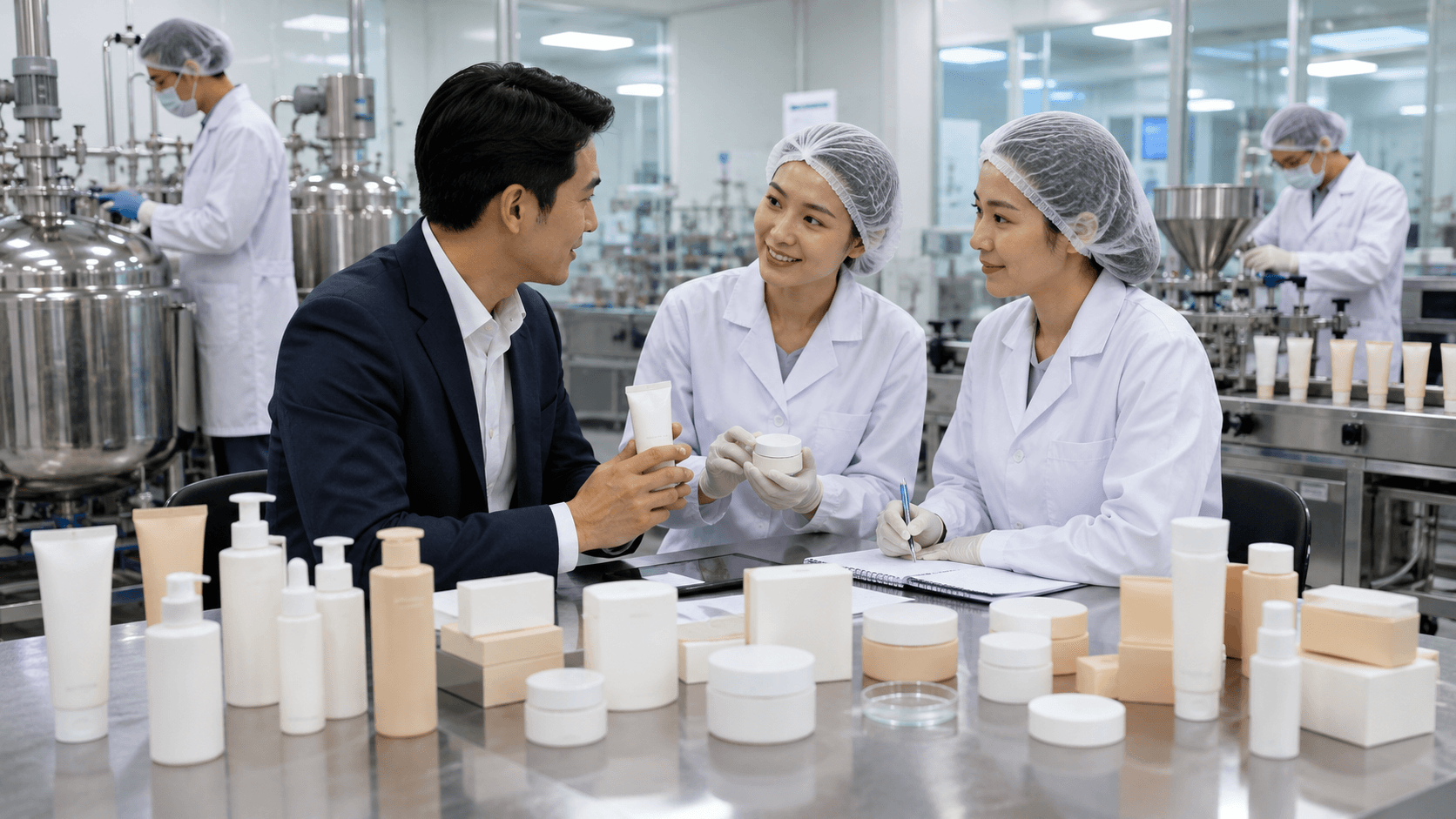
Sunscreen & SPF Products: How to Launch an OEM Suncare Line With a Malaysian Skin Care Manufacturer
The sunscreen category is one of the fastest-growing segments in Southeast Asian beauty — and for good reason. Rising awareness of UV damage, the proliferation of dermatologist-backed content on social media, and a growing preference for daily SPF as a skincare staple have created a compelling commercial opportunity for brand owners. If you are looking to enter the suncare space, partnering with an experienced OEM skin care manufacturer in Malaysia gives you access to GMP-certified facilities, NPRA-compliant formulation expertise, and the flexibility to bring innovative SPF formats to market without building a lab from scratch.
This guide covers everything a brand owner needs to know: regulatory requirements, formulation choices, trending product formats, and how to structure your suncare launch with a Malaysian skin care manufacturing partner.
Why Malaysia Is a Strong Base for Suncare Manufacturing
Malaysia’s cosmetic manufacturing sector operates under a well-established regulatory framework overseen by the National Pharmaceutical Regulatory Agency (NPRA). Manufacturers that hold GMP (Good Manufacturing Practice) certification and JAKIM Halal status are well-positioned to produce sunscreen products that meet both domestic and export market standards — including Indonesia, the Middle East, and Brunei, where halal compliance is a purchasing driver.
From a formulation standpoint, Malaysian skin products manufacturers have deep experience working with tropical-climate skin concerns. High humidity, strong UV index, and diverse skin tones across Southeast Asia are built into the R&D thinking of local contract manufacturers. This is a meaningful advantage when developing a suncare line intended for the region.
Understanding SPF: What the Numbers Actually Mean
Before briefing your OEM skin care manufacturer, it helps to understand how SPF labelling works.
SPF (Sun Protection Factor) measures protection against UVB rays — the primary cause of sunburn. SPF 30 blocks approximately 97% of UVB radiation; SPF 50 blocks around 98%. For most daily-use products, SPF 30–50 is the commercially accepted sweet spot.
PA ratings (Protection Grade of UVA) indicate protection against UVA rays, which penetrate deeper into the skin and contribute to photoageing. PA+++ and PA++++ are the most protective tiers and are widely expected by consumers familiar with Korean and Japanese beauty standards — a demographic that represents a significant share of Malaysian and regional buyers.
Broad-spectrum formulations protect against both UVB and UVA. This should be the baseline specification for any modern suncare product.
When briefing your skin care manufacturing partner, clarify the target SPF level, PA rating, and whether the formulation needs to meet specific regulatory standards for export markets.
NPRA Registration: What Skin Care Manufacturers Need to Submit
All cosmetic products sold in Malaysia — including sunscreens — must be notified to the NPRA under the Control of Drugs and Cosmetics Regulations 1984. Sunscreens are classified as cosmetics in Malaysia (not drugs), which simplifies the notification process compared to pharmaceutical sunscreens in some other markets.
Your OEM skin care manufacturer will typically assist with or advise on:
- Preparing the product information file (PIF) including full ingredient list (INCI names)
- Confirming that all UV filter agents used are approved under Malaysia’s Cosmetic Ingredient list
- Sun Protection Factor (SPF) test reports from accredited laboratories
- Stability testing documentation
Reputable skin products manufacturers in Malaysia will be familiar with NPRA notification requirements and can guide first-time brand owners through the process. This support significantly reduces the compliance burden for new entrants to the suncare category.
Physical vs Chemical Sunscreen: Which Formulation Is Right for Your Brand?
One of the first formulation decisions you will make with your skin care manufacturer is whether to go physical (mineral), chemical, or a hybrid approach.
Physical (Mineral) Sunscreen
Physical sunscreens use UV-blocking minerals — primarily zinc oxide and titanium dioxide — that sit on the skin’s surface and reflect UV rays. Key characteristics:
- Suitable for sensitive skin and baby/child product lines
- Popular in “clean beauty” and natural skincare positioning
- Can leave a white cast on deeper skin tones — formulation technique matters greatly
- Compatible with Halal certification (no animal-derived ingredients)
Chemical Sunscreen
Chemical filters such as avobenzone, octinoxate, and octocrylene absorb UV radiation and convert it to heat. Characteristics:
- Lighter, more elegant skin feel — preferred for daily-use moisturisers and tinted formulas
- Easier to achieve high SPF with no white cast
- Some filters require stability management (especially avobenzone)
Hybrid Formulations
Many successful suncare products combine both filter types — using a mineral base for broad-spectrum coverage while incorporating chemical filters for enhanced cosmetic elegance. An experienced OEM skin care manufacturer can help you find the right balance for your target consumer profile and price point.
Trending Suncare Formats You Can Produce via OEM
The days of the thick, greasy sunscreen lotion are largely behind us. Today’s consumers expect sunscreen that fits seamlessly into a broader skincare and makeup routine. Here are the formats gaining the most traction — all of which experienced Malaysian skin care manufacturing partners can produce:
Sunscreen Serum — Lightweight, often incorporating skincare actives (niacinamide, hyaluronic acid) alongside UV filters. Appeals to skincare-first consumers who want multifunctional products.
Sunscreen Mist — A spray format for reapplication throughout the day, popular for on-the-go usage. Works well for travel retail and e-commerce gifting.
Sunscreen Stick — Solid-format SPF in a swipe-on stick, excellent for targeted application (nose, around eyes). Growing in popularity for outdoor activity and sports positioning.
Tinted Sunscreen / BB Sunscreen — Combines SPF with light coverage, bridging the gap between skincare and makeup. Very commercially strong for platforms like TikTok Shop and Shopee.
Cushion Sunscreen — A format popularised in Korean beauty, now well within the production capability of regional OEM skin care manufacturers. High perceived value, strong lifestyle branding potential.
Discuss your target format with your manufacturer early — some formats require specialised filling equipment and packaging, which affects MOQ and lead times.
How to Structure Your Suncare Launch With a Malaysian OEM Partner
Here is a practical launch sequence for brand owners working with an OEM skin care manufacturer for the first time in the suncare category:
- Define your product positioning — Target consumer, SPF level, key claim (reef-safe, halal, sensitive skin, anti-ageing), and format.
- Brief your manufacturer — Share your specification, preferred texture and finish, packaging references, and any regulatory markets you plan to export to.
- Request formulation samples — Evaluate SPF elegance, skin feel, finish (matte, dewy, satin), and white cast on your target skin tone range.
- Commission SPF testing — Your manufacturer will arrange SPF and PA testing at an accredited lab; factor 4–8 weeks for results.
- Finalise packaging and labelling — Sunscreen labels must include SPF value, application instructions, and NPRA notification number.
- Complete NPRA notification — Your manufacturer can assist; allow 2–4 weeks for processing.
- Place production order — Confirm MOQ, lead time, and delivery terms.
Explore Everfresh Premium’s full range of OEM skin care products and manufacturing services to understand the formulation and production capabilities available to your brand.
FAQ: Common Questions About OEM Suncare Manufacturing in Malaysia
Q: What is the minimum SPF level I should launch with?
SPF 30 is the accepted baseline for a daily-use sunscreen. For a product positioned as a serious sun protection solution — especially for outdoor, sports, or tropical travel use — SPF 50 or SPF 50+ is recommended.
Q: Do I need separate NPRA registration for each sunscreen product?
Each individual cosmetic product requires its own NPRA notification in Malaysia. If you are launching a range (e.g., SPF 30 moisturiser, SPF 50 serum, SPF 50+ mist), each must be notified separately. Your OEM skin care manufacturer can assist with the documentation for each SKU.
Q: Can Malaysian skin products manufacturers produce halal-certified sunscreen?
Yes. Malaysian manufacturers holding JAKIM Halal certification can produce halal sunscreens, ensuring all ingredients — including UV filters, emulsifiers, and preservatives — meet halal requirements. This is a significant commercial advantage for brands targeting Muslim-majority markets in Southeast Asia and the Middle East.
Q: How long does sunscreen product development take with an OEM skin care manufacturer?
From initial brief to finished goods, a typical timeline is 3–6 months. This includes formulation and sampling (4–6 weeks), SPF testing (4–8 weeks), NPRA notification (2–4 weeks), and production. Planning ahead is essential — factor in this lead time before your intended launch date.
Q: What is the typical MOQ for OEM sunscreen manufacturing in Malaysia?
MOQ varies by formulation type and packaging. Liquid and lotion formats generally carry lower MOQs than more complex formats such as cushions or sticks. Discuss your launch volume with your manufacturer early to confirm whether a low-MOQ pilot run is available before committing to a full production order.
Conclusion: The Suncare Opportunity Is Now
Sunscreen is no longer a seasonal or niche product in Malaysia and Southeast Asia — it is a daily essential with strong and growing consumer demand. For brand owners, the combination of favourable market conditions, accessible OEM skin care manufacturing in Malaysia, and a maturing regulatory framework makes this an excellent time to launch a suncare line.
Whether you are introducing a hero SPF serum, a reef-safe mineral sunscreen, or a tinted SPF moisturiser, working with a GMP and Halal-certified Malaysian skin care manufacturer gives your brand the formulation credibility and compliance foundation it needs to grow.
Browse Everfresh Premium’s OEM skin care product capabilities or learn more about our manufacturing services to begin your suncare brand journey.


